

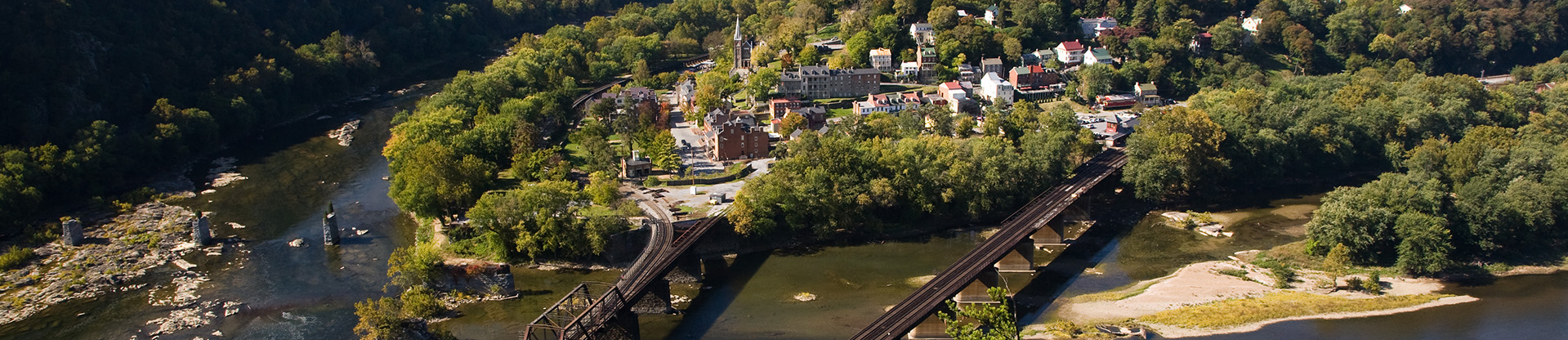
The Customs and Border Protection’s (CBP) Advanced Training Center (ATC), located in Harpers Ferry, West Virginia, is a vital training site that incorporates numerous training missions within a single setting. This Sustainability Component Plan (SCP) established goals and strategies to develop and maintain sustainability in the energy, water, waste and stormwater programs at the center.
This SCP was undertaken in order to support the center’s original plans for substantial gains in energy, waste, stormwater, and water management processes at the site, while leveraging the on-going planning momentum at the center on the heels of the recently completed Area Development Plan (ADP). The SCP was created to continue developing the site as a model CBP training center, delivering both the practical and implementable strategies the on-site personnel desired as well as aspirational ideas consistent with the bold original plans for the site.
The SCP served as a check on the recently completed ADP, ensuring that ATC personnel were not simply resting on the many sustainability strategies that had already been implemented at the site. The small size of the site allowed the planning team to take risks and try new SCP methods and approaches. The ATC personnel began taking action on some sustainability strategies and projects immediately, such as better monitoring of its largest cardboard recycling sources, understanding how to utilize recycling revenues to support sustainability initiatives, and conducting an energy metering pilot study.
An example of the unique analyses that supported the SCP is the waste characterization study. A visual volumetric analysis of waste dumpster contents and a general analysis of waste management processes were realistic and detailed but executed efficiently enough to remain at the planning level. Another example is the assessment of the types and specific locations of potential stormwater management projects. The results of this analysis included a detailed and user-friendly map of potential projects. A planning-level energy assessment was also conducted by the United States Army Corps of Engineers. The energy assessment is both robust in its detailed inclusion of current facilities and systems and dynamic in the ability of staff to continue to tweak the assessment online.
The project was honored by the American Planning Association’s Federal Planning Division with an Honor Award for Outstanding Environmental Planning Project.