

ABQ’s Multimodal Adventure: a Burqueña’s Perspective
One of the most important requirements for planning for walking, biking, and rolling infrastructure in our communities is ensuring that it is perceived as safe. Our vital walking and cycling corridors need to make people feel comfortable and visible, especially when crossing a road or street to continue your journey on foot or by bike.
Albuquerque, the largest city in New Mexico, has an abundance of off-street multimodal infrastructure. In New Mexico, arroyos help to channelize water and mitigate flash flooding. In ABQ, most of the flash flood waters flow down from the Sandia Mountains to the east. Most (if not all) of the arroyos in ABQ are equipped with shared use paths that run adjacent to them on an elevated portion of the easement.
Although not perfect, the arroyo infrastructure connects much of the city with multimodal off-road facilities. The arroyos in our neighborhood lack pedestrian-scale lighting, which is essential for ensuring safety at night. As a woman, I personally would not feel comfortable or secure walking or cycling on them alone at night. Beyond issues that come into play once the sun sets, many of the roadway crossings along the arroyos feel unsafe.
For example, near where I live, the Embudo Arroyo crosses Eubank Blvd NE and people walking or cycling must cross three lanes of traffic twice, separated by a narrow concrete median. There is no high-visibility crosswalk on either approach of the roadway; the only way to signal your presence to drivers is to push the button to activate the flashing beacon.
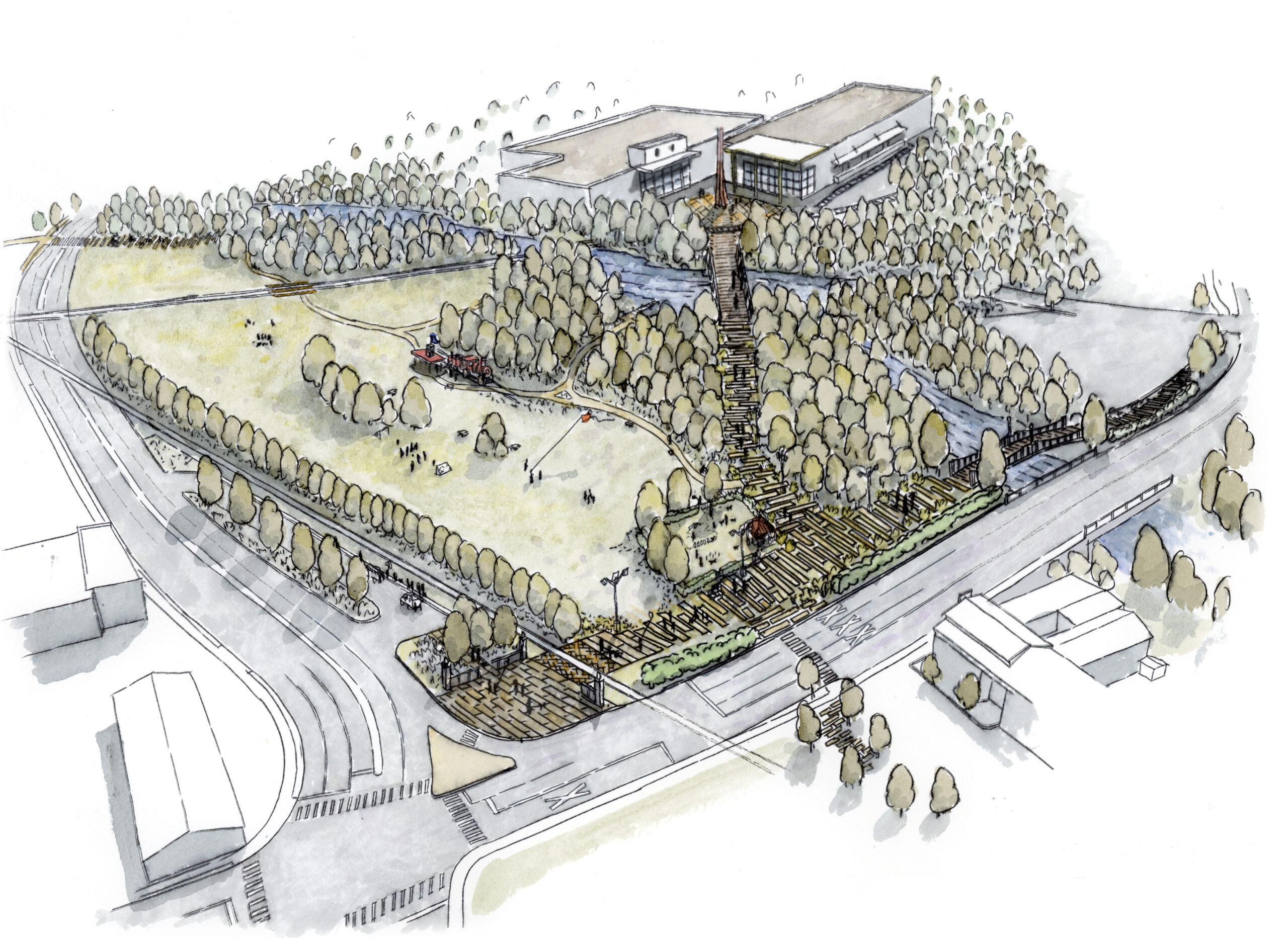
There are many things that Albuquerque does well in terms of multimodal transportation planning. A 7-mile Rail Trail loop is currently under construction in downtown ABQ. Upon completion, it will connect the Alvarado Transportation Center (the main hub for all the city’s transit routes) to the Convention Center, Historic Rail Yards, the Sawmill District, Old Town, the ABQ BioPark, and more. The downtown area is one of the densest in the city for people walking, cycling, and taking transit; it deserves this significant investment in separated multimodal infrastructure.
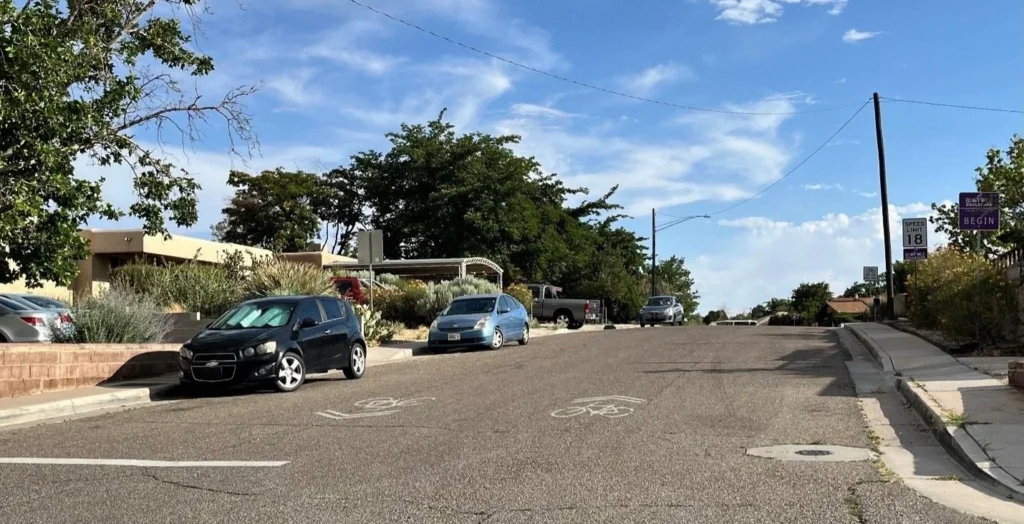
Some of the older neighborhoods closer to the University of New Mexico campus, Nob Hill, and downtown are doing things well. Bicycle boulevards are examples of low-cost ways to communicate that there is a safe, connected, and comfortable cycling network prioritizing lower stress connections, such as the one pictured below. Sharrows, while typically not a low stress treatment, work well here alongside on-street parking to provide wayfinding. There’s also an 18 MPH local residential street (perhaps a more precise conversion of the 30 km/h neighborhood streets common in many countries?), and bright purple signage that indicates a bicycle boulevard is beginning here.
Funding limitations are a significant issue in Albuquerque and New Mexico as a whole. Chasing and managing federal funding and grants is often a full-time job in and of itself. In many rural settings and even some urban areas, including Albuquerque, agencies lack the resources to hire such dedicated personnel. This means that opportunities to get significant funds from the federal government are missed and transportation safety improvements happen much slower, with certain areas prioritized over others.
The truth of the matter is that when resources are limited, it is crucial to prioritize improvements in places where the most people with the highest need will benefit. However, I hope that in my lifetime the process of creating safe multimodal networks within our communities for cycling, walking, rolling, and more will be easier and faster to fund and implement. Until then, this multimodal transportation and transit planner is grateful to play a direct role in making this vision a reality.
trails | safety | funding