

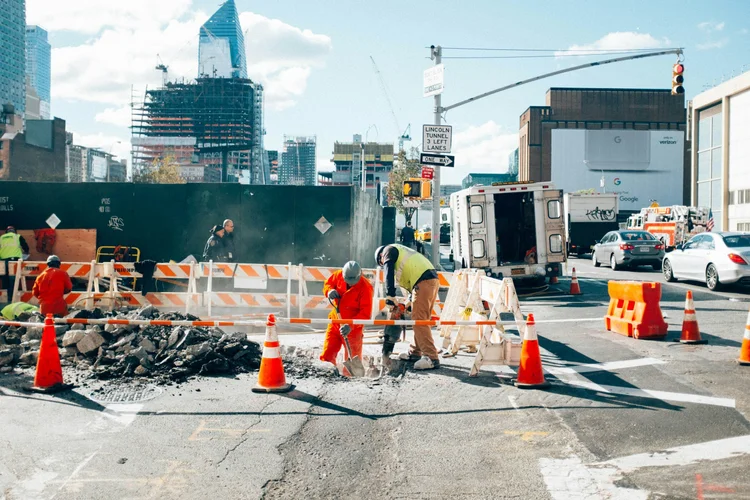
“… you still have made a choice.”
Aside from being lyrics from the awesome song “Freewill” by the legendary Canadian rock band, Rush, this line succinctly describes the procedural logjam lots of local agencies feel when it comes to implementing the plans they make. Making a plan is a big effort in and of itself, but bringing the stuff envisioned in that plan to life can feel like a gargantuan task. Why is that?
Inertia. It is real. Just as this concept applies to the physical world, policies or projects at rest tend to stay that way unless pushed by a strong enough force to overcome bureaucratic friction. As living creatures, we’re also hardwired to expend as little energy as we can to meet our needs for survival—resources are scarce and competition is fierce.
In the mobility space, we know that the status quo isn’t working. Our streets should be safer, more welcoming for all people, and contributors to economic vitality, so why are we falling behind our peers in the developed world? How can practitioners overcome bureaucratic intertia to get things moving when we know that there’s so much to do? Peoples’ lives are on the line, and inaction has potentially more consequences than taking an action that isn’t 100% correct.
Back to Rush and their lyric. Inertia is not neutral—it is a choice. Just as doing nothing is a choice, delaying or deferring the process of making a decision is itself a decision. There are lots of scary unknowns out there, to be sure. What will the public think about this? What are the future costs going to be? Did we miss something? Second guessing feels like the responsible thing to do, until it becomes a ball and chain that hold back meaningful progress.
We shouldn’t act rashly, of course. We need to have meaningful and insightful discussions with all stakeholders about the projects and policies we work on. How we frame the discussion matters, though. Nobody wants to feel like they’ve been lectured to by a bunch of eggheads who think they know best. We don’t want to be those eggheads, either. However, as subject matter experts, we have a responsibility to educate and advocate for solutions that will bring the most benefit to the most people. Those solutions may not please everyone, but sometimes deciding to try something is better than any other choice.
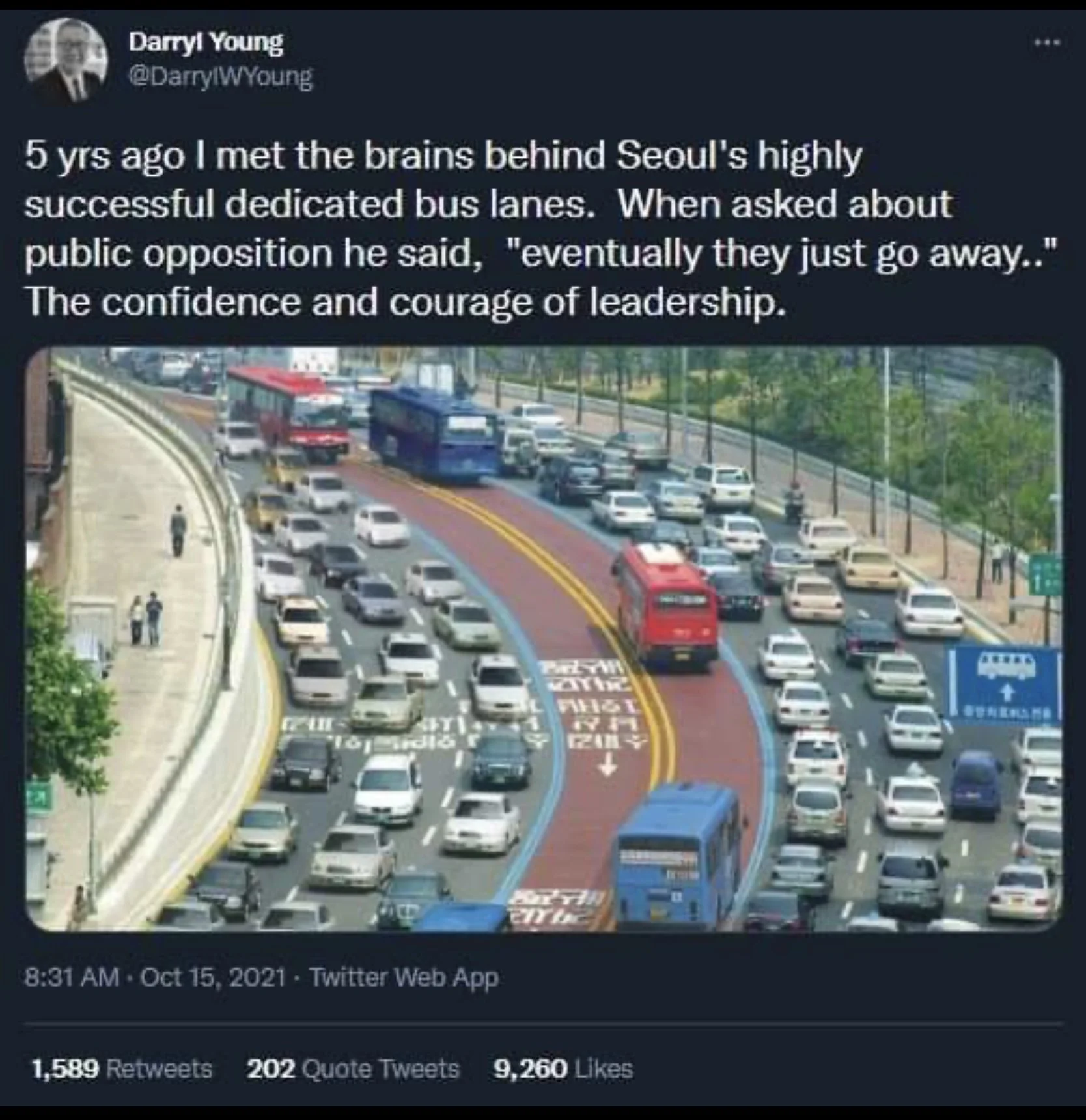
Leadership is a tough business. It requires an ability to overcome inertia, which often takes plenty of bravery. I’m reminded of a (since deleted) social media post from a few years ago that provided an example of inertia-busting from South Korea. Installing BRT lanes was the right call, though you wouldn’t have thought so during the planning phase. Ultimately, leadership won the day and people can see and experience the benefits. Not every project or policy is going to be a slam dunk, but charging toward the basket is nearly always better than standing there dribbling the ball ad nauseum. We’re not in this business to run out the clock—we do what we do to make the places we care about better.
leadership