

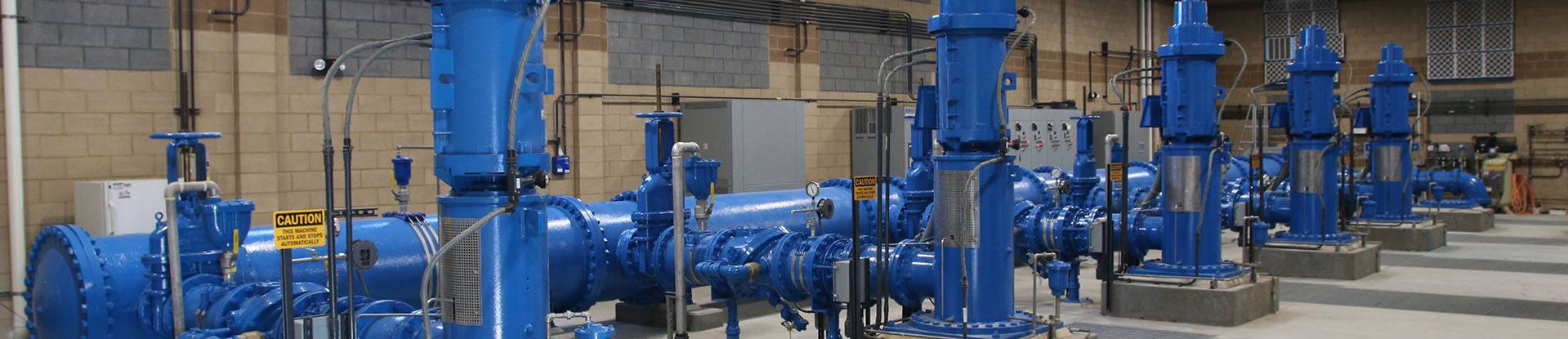
Michael Baker provided design engineering services and construction phase support, including full-time construction management and inspection services, for the Whittier Utility Authority’s (WUA) Pumping Plant No. 2 Replacement project.
PP2 is described by the WUA as the “heart” of its water system because it’s the City’s most critical facility. It conveys all of the water supplied from the well fields north of Whittier to the WUA’s 48,000 customers. However, after more than 75 years in service, the City determined that Pumping Plant No. 2 (PP2) needed to be replaced.
During the preliminary design phase and final design phase, our team provided the following key services:
- Conducted a comprehensive hydraulic analysis of WUA’s supply and distribution systems;
- Developed facility layouts that allow for project phasing to ensure continuous operation of the existing pumping station during construction;
- Evaluated the existing facilities supplying the pump station and the WUA disinfection system and worked with WUA and the Division of Drinking Water (DDW) to develop an inlet pipeline and forebay system that not only met all of CDPH’s disinfection requirements, but also improves the operational hydraulics of the pump station
Final design of the PP2 Replacement Project addressed several critical design issues, including:
- Mitigating the potential for liquefaction resulting from a seismic event using an in-situ soil remediation system (Geopiers ®);
- Developing a pumping facility layout to enable the future conversion from electric motors to gas engine-driven pumps;
The new facility, named the Marshall R. Bowen Pumping Plant, includes:
- A new 18.9-MGD pump station, with 17,500 gallons per minute of pumping capacity to enable WUA to pump during off-peak periods and reduce power costs;
- Two 2.2-MG above-grade steel reservoirs;
- A 6,400-square-foot pump building, including office space for water production and pumping plant personnel;
- Modified pumping station control schemes and new piping and control valves at off-site reservoirs