

The architecture, engineering, and construction (AEC) industry is undergoing a transformation in how infrastructure is planned, designed, constructed, and managed. As agencies move beyond traditional document-centric workflows, digital project delivery is enabling teams to leverage engineered digital models, structured information, and connected data throughout the project lifecycle. More than a technology initiative, this shift represents a new way of delivering infrastructure—one that improves collaboration, reduces risk, supports better decision-making, and creates lasting value beyond construction. Through Building Information Modeling for Infrastructure (BIM4I), agencies are aligning people, processes, and technology to establish a scalable foundation for digital delivery, asset management, and future digital twin capabilities.
Selecting the Right Digital Tools
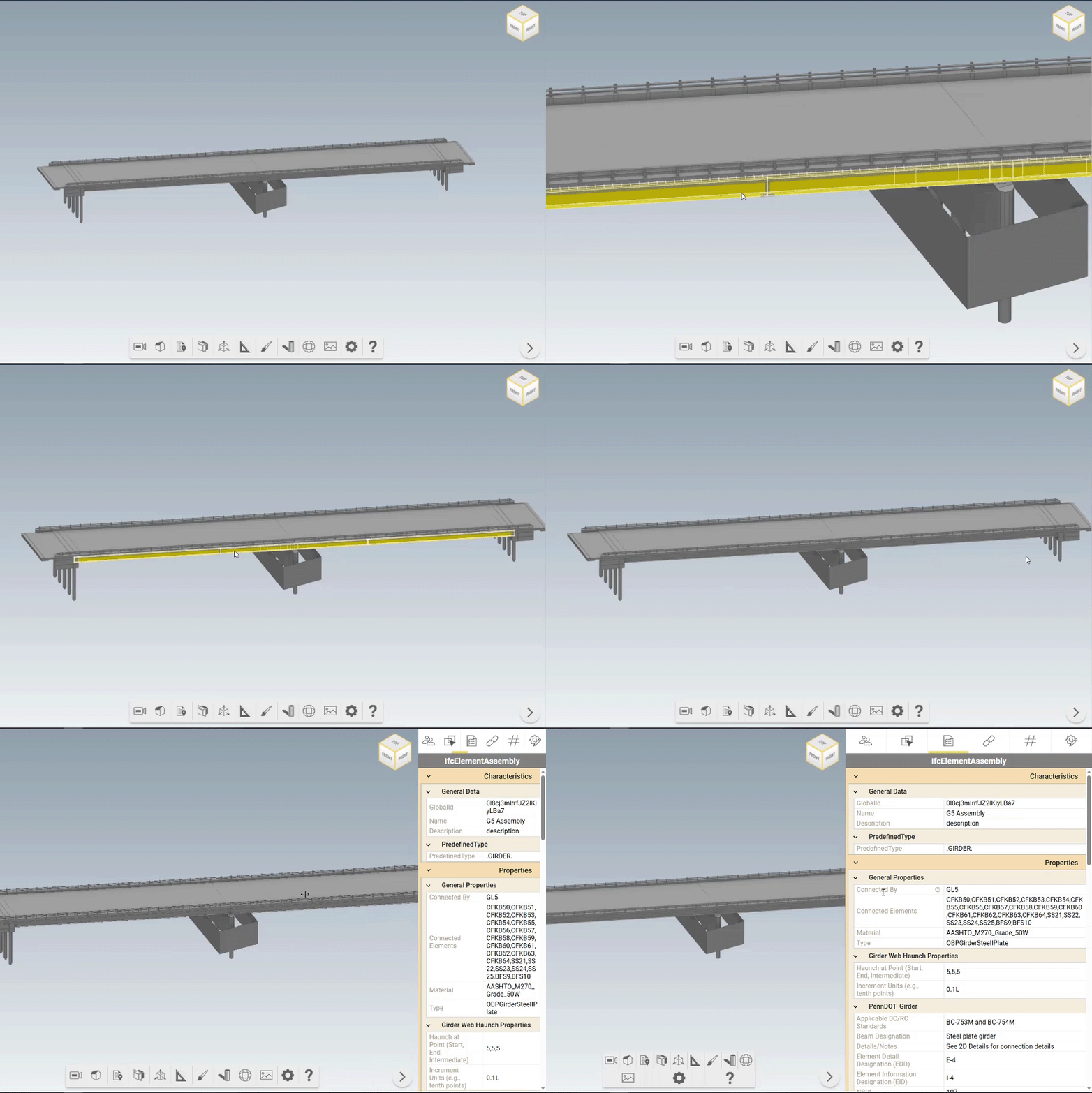
Digital project delivery and digital twins are two enablers that support the infrastructure lifecycle as part of a BIM4I process or culture. Digital project delivery primarily leverages a Project Information Model (PIM) used during planning, design and construction, where it helps us create and manage a shared digital model that brings geometry, data, and decision-making together. As a bridge, for example, is built and put into service, that same foundation of information can evolve into a digital twin, a dynamic representation that supports inspection, maintenance and long-term operations – or Asset Information Model (AIM). Digital project delivery helps us design and construct infrastructure like bridges more efficiently, while digital twins help owners understand and manage those bridges long after construction is complete. Together, they’re changing how we think about the full lifecycle of data for bridge assets.
With more than 40 colleagues on our team trained in digital project delivery and BIM4I, we’re partnering with clients on BIM4I transformations in over 25 states. Along the way, many of these efforts are extending beyond design and construction to include digital twin components that support long-term asset management. As digital project delivery continues to evolve, we’ve developed our own in-house digital twin environment for development and testing across our practices. This allows us to explore new ideas, validate workflows, and better understand how digital twins can complement digital project delivery as we work toward a BIM4I culture.
Through more than 20 pilot projects and BIM4I program support to over eight State Departments of Transportation (DOTs), we guide agencies in defining clear implementation pathways that translate strategic intent into measurable outcomes by establishing practical work plans built on DOT governance structures and phased deployment strategies that clarify how digital project delivery is implemented, who is responsible, and when key milestones are achieved—drawing from leading practices implemented by agencies such as the California Department of Transportation (Caltrans), Texas Department of Transportation (TxDOT), and Pennsylvania Department of Transportation (PennDOT).
Central to this approach is helping agencies select and apply the right digital tools to manage bridge assets across their full lifecycle—from planning and design through construction and long-term operations—while integrating constructability-driven workflows that account for construction sequencing and staging, erection strategies, site logistics, visualization, and work area constraints. This is especially critical in accelerated delivery methods such as design-build, where real-time collaboration and rapid owner engagement are required, enabling teams to deliver actionable design outputs that support contractor means-and-methods, reduce risk, and improve decision-making and predictability on major bridge programs, with scalable application to agencies such as the Maryland Department of Transportation (MDOT), Ohio Department of Transportation (ODOT), and Nevada Department of Transportation (NDOT).
Incorporating Emerging Technologies
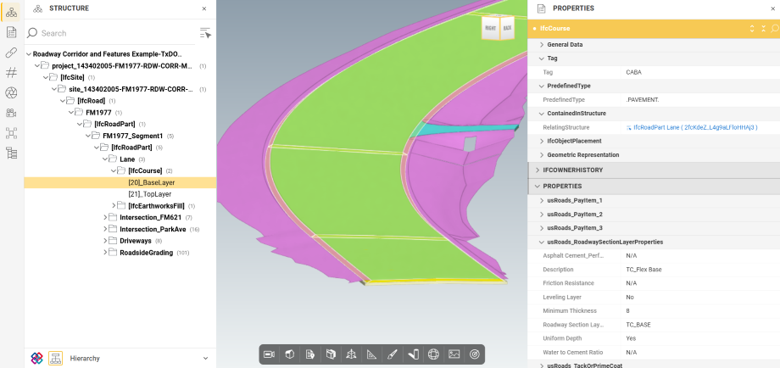
We’re also beginning to see the practical role that emerging technologies like artificial intelligence (AI) can play in bridge design today. For example, in many cases, AI-enabled script files are being used to bridge gaps between existing software tools, helping automate repetitive tasks or connect systems that don’t yet work seamlessly together. These approaches aren’t meant to replace core engineering tools, but rather to serve as thoughtful workarounds while industry software continues to mature. By using AI in targeted, problem-solving approaches, we are maintaining momentum and continuing to advance digital delivery even as the technology landscape evolves.
To stay ahead of where the industry is headed, we are using our in-house digital twin environment for development and testing of these emerging technologies across our practices. This allows us to explore new ideas like integrating bridge condition management, Bridge Weigh-In-Motion (BWIM) and Structural Health Monitoring (SHM) as digital twin use cases. We can also validate workflows and better understand how digital twins can complement digital project delivery in operations and maintenance to streamline inspections and ratings, identifying defects, managing material properties and warranties and further connecting design models for rehabilitations as we work toward a BIM4I culture.
Collaborating Across the Industry
Advancing digital project delivery for infrastructure requires collaboration across the entire transportation industry. Forums like BIM Week bring together Transportation Pooled Fund (TPF) programs, AASHTO committees and the buildingSMART International (bSI) Transportation Summit to align on shared challenges and solutions. A recent key outcome was a joint white paper to AASHTO through the AASHTO Joint Technical Committee on Data Standardization (JSTAN) detailing the importance of AASHTO governance of digital standards. AASHTO has developed a Digital Delivery Task Force to further investigate this need for digital standard governance.
As agencies continue to evolve their BIM4I programs, realizing the full value of digital project delivery requires aligning strategy, standards, governance, and technology across the infrastructure lifecycle. This foundation is critical and we see it put to the test through real-world applications.
In our next blog post, we will explore pioneering pilot projects that are putting digital project delivery into practice.