


As transportation agencies continue advancing digital project delivery, pilot projects are playing a critical role in turning strategy into implementation. Supported by targeted federal funding, these initiatives allow agencies to test emerging technologies, validate industry standards, and demonstrate the real-world value of model-based workflows before adopting them at scale.
A Focus on Funding
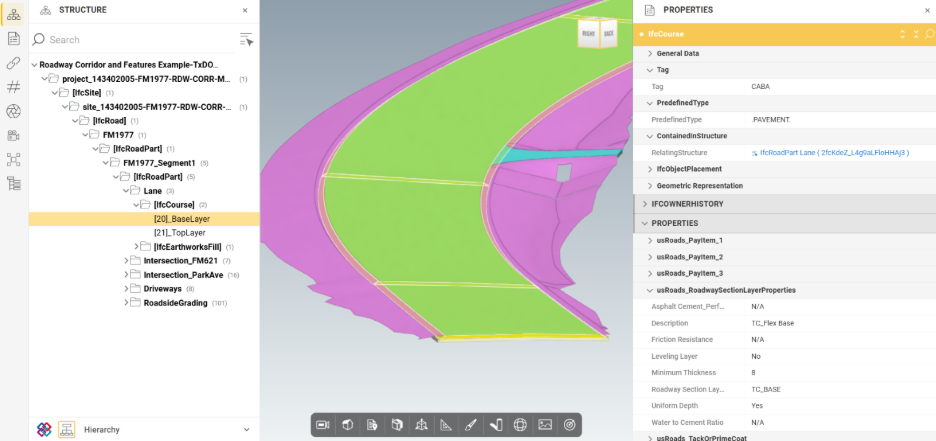
One of the most impactful ways digital project delivery is being advanced today is through the Federal Highway Administration’s (FHWA) Advanced Digital Construction Management Systems (ADCMS) grant program and Transportation Pooled Funds. Established under the Infrastructure Investment and Jobs Act, ADCMS provides dedicated funding to help state DOTs move beyond planning and into real implementation of digital construction and delivery practices. These grants are designed to support technologies and workflows that improve how projects are designed, built, and managed. FHWA is using ADCMS funding to reduce barriers to adoption and accelerate the industry’s transition toward more connected, data-driven project delivery. These projects build on the data standards that leverage Industry Foundation Classes (IFC) being developed by the Transportation Pooled Funds for BIM for Bridges and Structures and BIM for Infrastructure.
By beginning with pilot projects, we are able to help evaluate purpose driven solutions in real-world bridge applications before implementing them more broadly. These pilots help reduce risk, validate standards, and demonstrate value. The lessons learned during these pilot projects can then be carried forward into future projects and programs.
Transforming Bridge Project Delivery
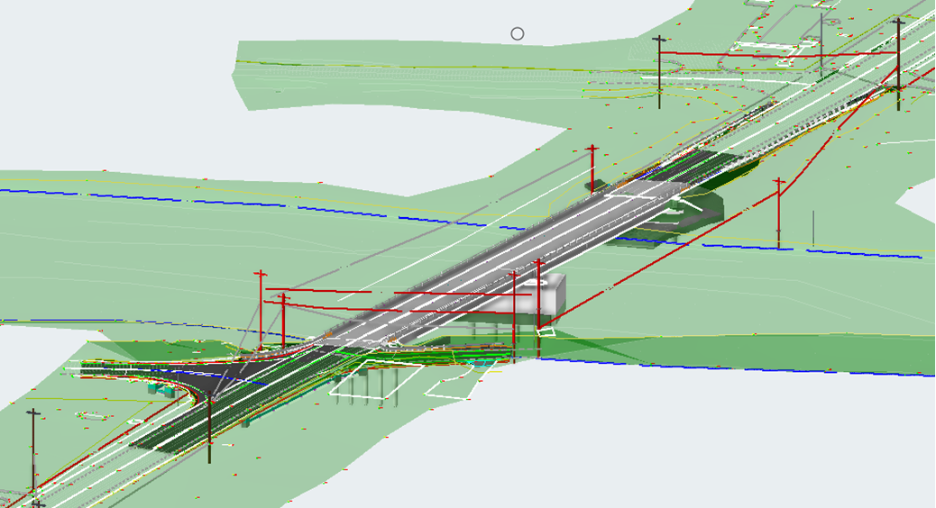
The Pennsylvania Department of Transportation’s (PennDOT) ADCMS bridge initiatives are aimed at transforming how bridge projects are delivered by shifting from traditional paper plans to a fully digital, model-based approach. Central to this effort is the use of open, standardized formats that allow designers, contractors and other stakeholders to work from the same shared 3D model, improving coordination and creating a more accurate record of what is actually built.
A major milestone in this program is the Model as a Legal Document (MALD) pilot, which explores using IFC models as the official, legally-binding deliverables instead of 2D drawings. This represents a significant shift in the industry, requiring teams to test how information is structured, exchanged, and relied upon throughout the project lifecycle. The team is evaluating whether contractors and other partners can confidently use these digital models during construction.
Our team at Michael Baker played a leading role in advancing this approach through the SR 6 pilot project for PennDOT. Leveraging ADCMS funding, the team tested the Information Delivery Manual (IDM) developed by the BIM for Bridges and Structures Transportation Pooled Fund (TPF). This effort marked the first project in the United States to deliver a contractual IFC model that contractors could directly use within their construction tools, demonstrating that a model-based approach can work in practice.
To support broader adoption, the initiative also encourages integrating Industry Foundation Classes Version 4.3 (IFC4x3), an open, vendor-neutral data standard for exchanging BIM and digital infrastructure information between different software platforms, into design and construction software platforms, making it easier to share and use model data across systems. Ongoing collaboration with related research efforts and future project phases helps refine the approach and align it across the industry.
Ultimately, this work is helping establish digital models as the single source of truth for bridge projects. From design through construction and final documentation, these models can serve not only as coordination tools but also as the official record and legal foundation for how infrastructure is delivered.
As more agencies leverage pilot efforts, digital delivery is moving from experimentation to standard practice, helping bridge owners confidently modernize how projects are delivered and managed.
Digital delivery is no longer an emerging concept; it is evolving into practice for how bridges are designed, delivered and managed across their full lifecycle. By aligning digital tools with the needs of people and processes, and combining that with strong industry