

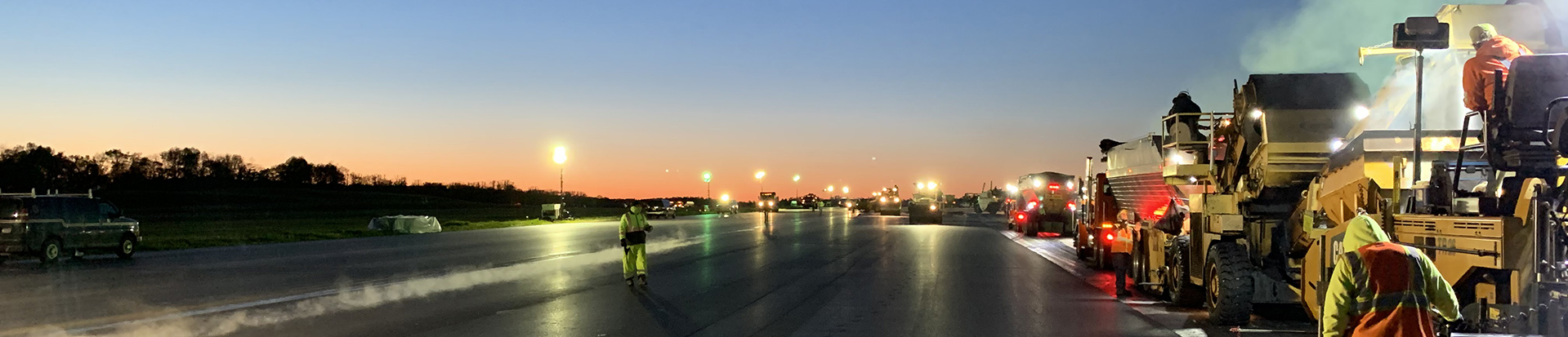
Westchester County Airport’s Runway 16/34 was originally scheduled for rehabilitation in the summer of 2020. However, with the outbreak of COVID-19, Michael Baker, as part of a joint venture with The LiRo Group, coordinated with the client, Westchester County, and contractor to completely redevelop the construction phasing plan and construction schedule to complete the project on an expedited time frame earlier in the year when air traffic was greatly reduced. This proactive approach allowed construction to be completed in just three weeks on a fully closed runway, rather than the planned three months of nighttime-only construction. The result was higher quality construction, reduced construction costs, no operational impacts to the airport or airlines, and increased safety during construction – all on an aggressive schedule.
The Michael Baker/LiRo JV team performed critical aviation design and construction services for this complex rehabilitation project which involved repaving more than one-million square-feet of the airport’s primary runway and associated connector taxiways with 50,000 tons of bituminous hot-mix asphalt and installing a new Runway Lighting System and Precision Approach Path Indicator Navigational Aid.
To further increase asphalt construction and expedite installation, the JV team also developed a quality control procedure that allowed the contractor’s back-up asphalt plant to produce simultaneously with their primary plant. With the extended closure, this enabled trucks to deliver up to 6,000 tons of asphalt in a single shift, up from 1,000 tons, while maintaining a high-level of material acceptance testing throughout installation.
Safety was paramount on this project. With the COVID-19 crisis especially prevalent in New York, specifically Westchester County, safety plans were prepared to include both best practices and contingent measures to prevent further transmission of the virus. Every day on-site, individuals completed a discrete pre-work checklist and temperature check, and protective face coverings, gloves and routine sanitation were mandated. In addition, all progress and coordination meetings were performed remotely via WebEx, including the entire effort to re-phase, re-sequence and accelerate the project.