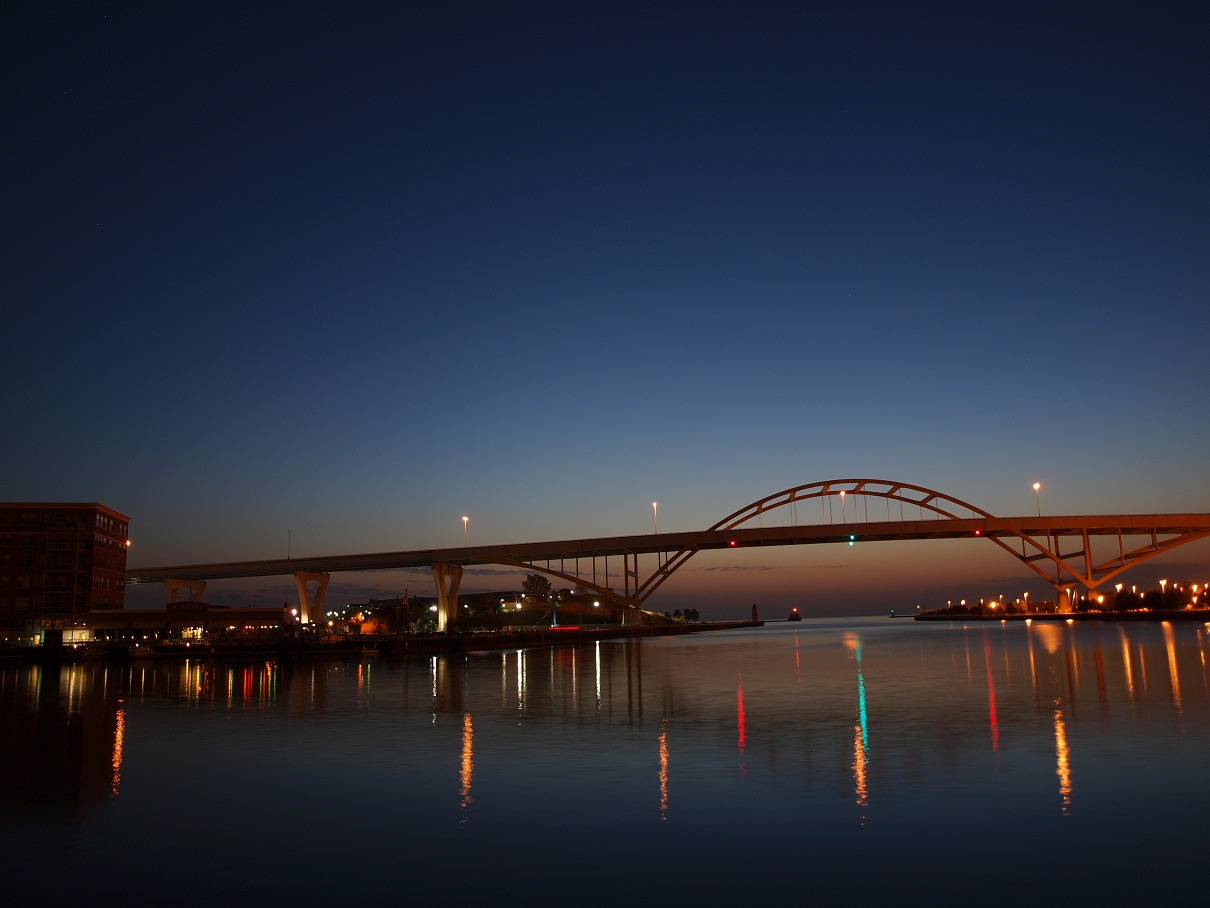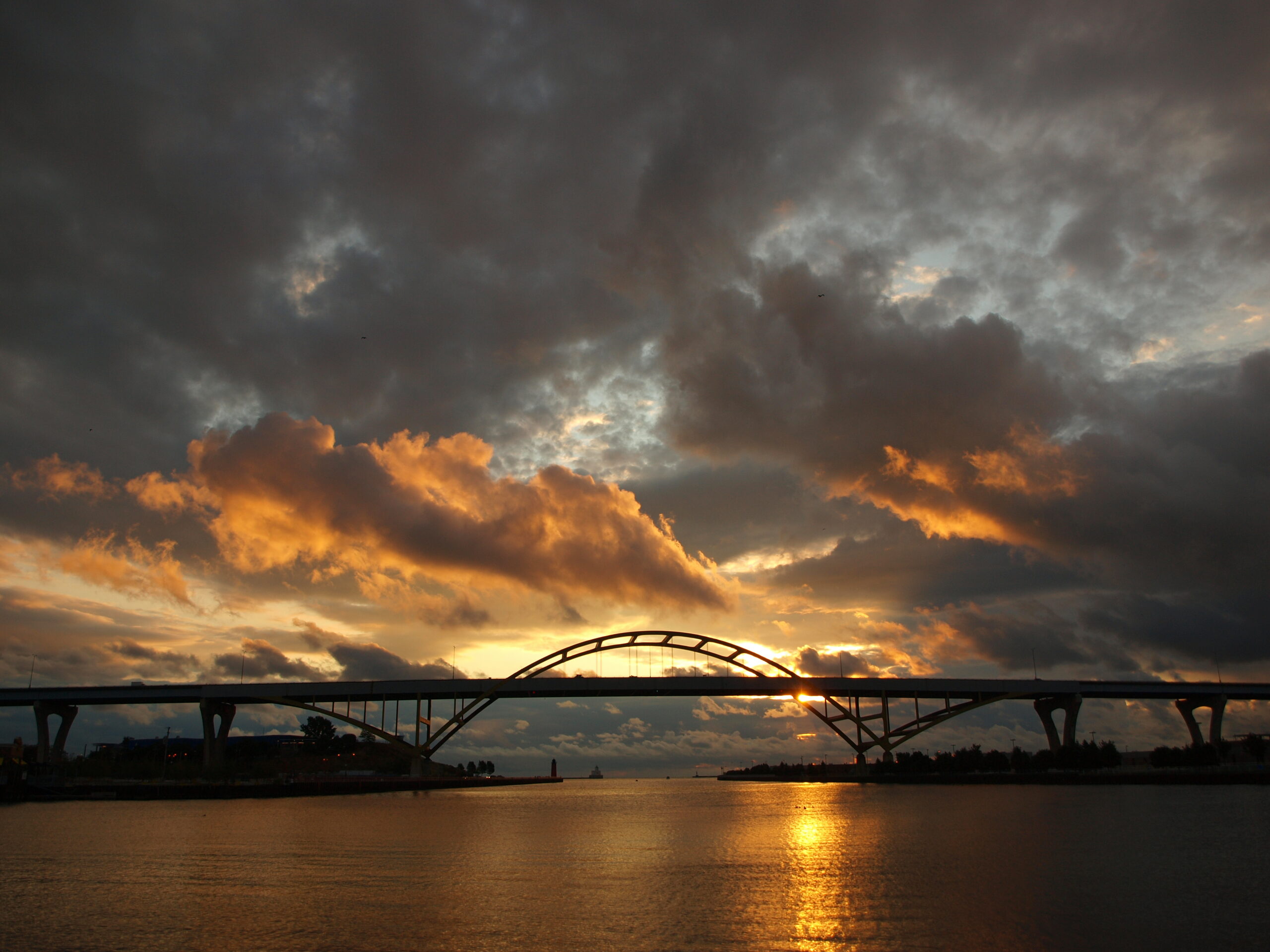
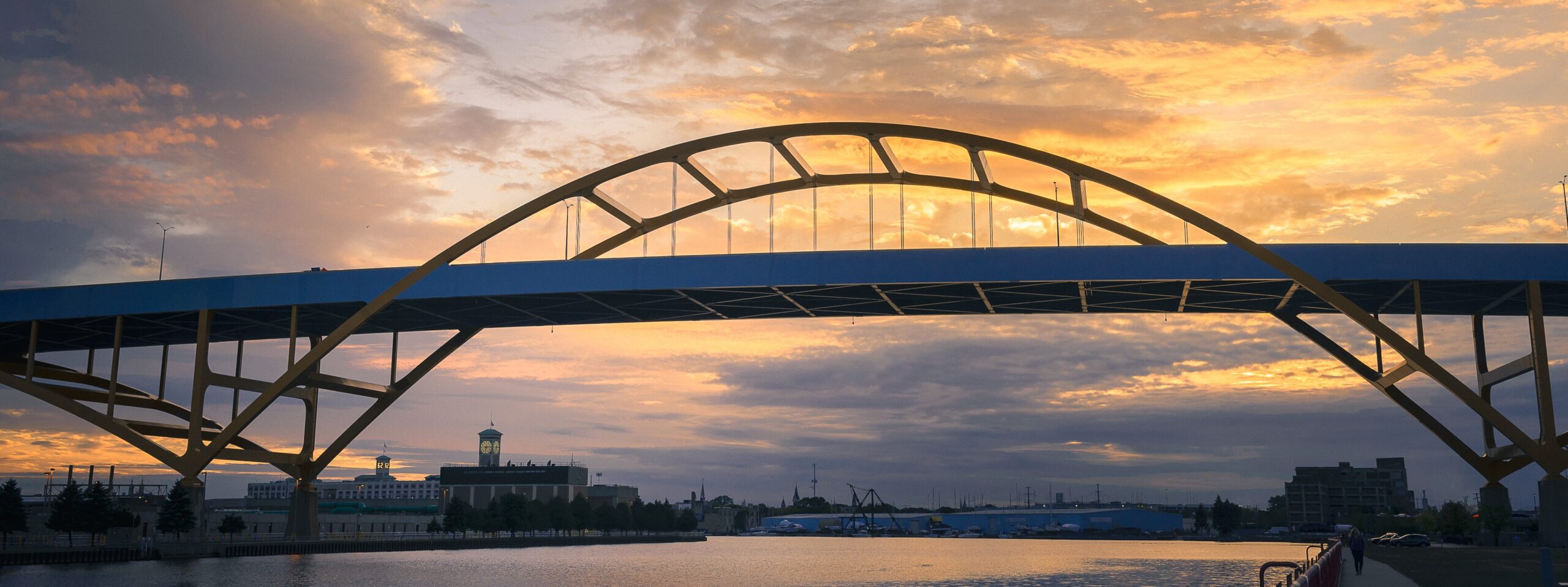
Michael Baker served as engineer of record for the rehabilitation and preservation of the iconic tied-arch bridge and complex I-794 Lake Freeway approach structures.
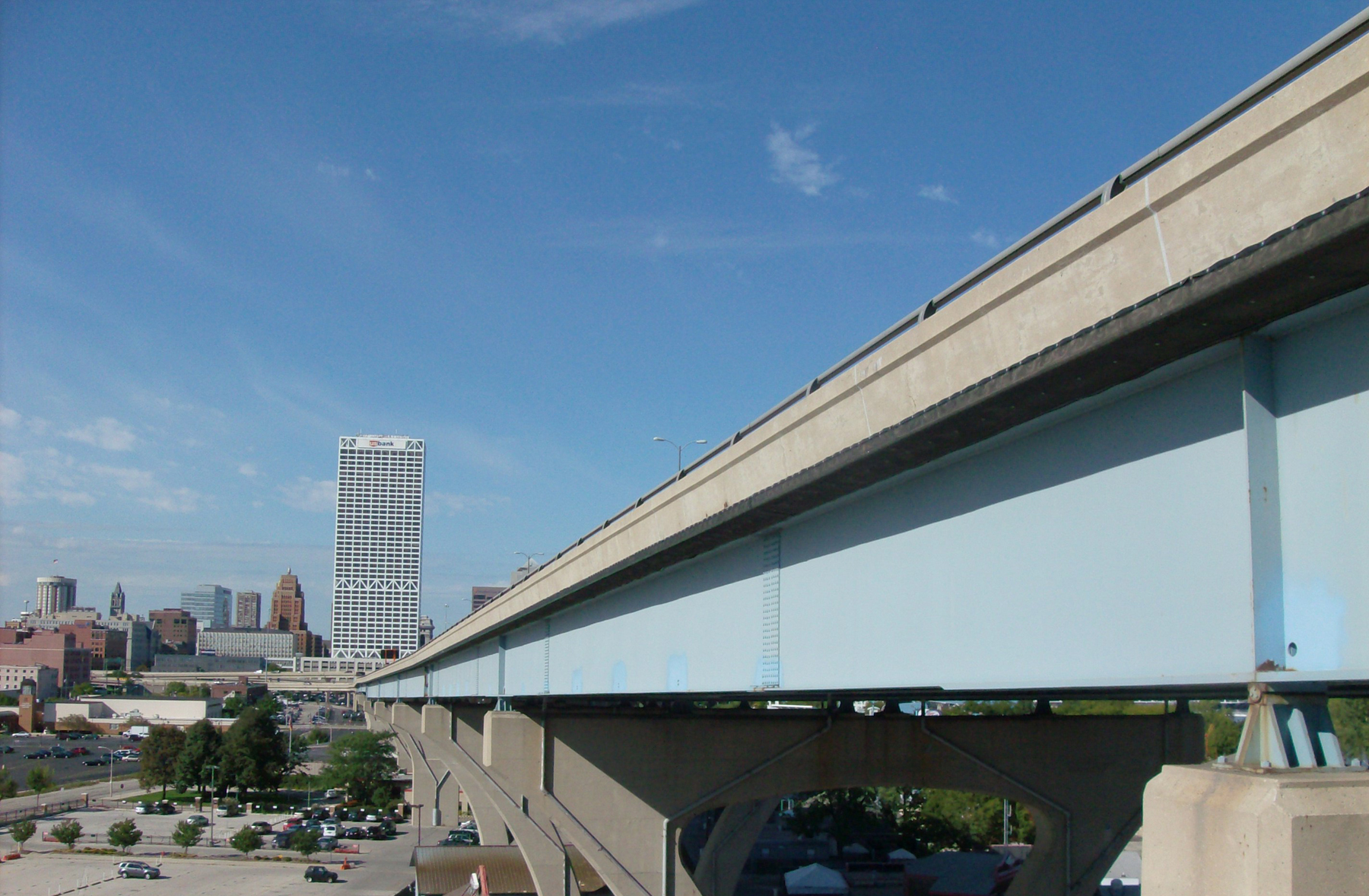
While the Hoan Bridge served the city well for 40 years, four decades of steady traffic and Wisconsin winters took their toll, leaving the two-mile-long bridge and adjacent roadway deteriorated and in need of rehabilitation.
The $200 million project, which encompassed more than five miles of bridge length in the heart of downtown Milwaukee, involved structural improvements over the entire corridor as well as the reconstruction of numerous bridge ramps. The team delivered the preliminary and final designs in only 17 months compared with a typical delivery time of two to three years for a project of this scale, requiring close coordination between our team and WisDOT. This included more than 2,500 final design drawing sheets completed in just nine months.
The project incorporated several technical and material innovations, including:
Key Rehabilitation Design Documentation – Comprehensive decision memorandum was provided throughout the design for a collaborative, successful conclusion, with topics including steel girder ship lap joint replacement; Life Cycle Cost Analysis (LCCA) for deck slab replacement alternatives; and various alternative types of rebar.
Stainless Steel Bridge Deck Reinforcement – The innovative use of stainless steel reinforcement in the bridge deck, the largest use of stainless steel on a project in the Midwest, will allow the bridge deck to last decades longer than a traditional deck.
Light Detection & Ranging (LiDAR) – Used to collect and process bridge component data, this geospatial information technology better defined the project geometry to help contract document production, saving time and money.
Movable concrete barriers (MCB) – In its inaugural use in Milwaukee, this approach maintained two peak direction lanes during peak traffic volumes. MCB minimized impacts to the traveling public during rush-hour by allowing the number of traffic lanes to be adjusted to match daily traffic patterns, reducing user delays. Staged-construction approach – The staging was critical to meet the project’s construction schedule while minimizing public impacts and received enthusiastic public acceptance. Extensive stakeholder coordination and public involvement was undertaken due to the high-profile nature of this project.
At-A-Glance
- Engineer of Record, Michael Baker, led the rehabilitation and preservation of the tied‑arch bridge, which carries 42,000 vehicles daily as a primary commuter route.
- The team delivered the preliminary and final designs in only 17 months.
- The project featured a range of innovative technical and material solutions.
- Rehabilitation efforts involved:
- Replacing 34,000 cubic yards of deck concrete.
- Installing 11 million pounds of deck-reinforcing steel.
- Repainting 1.5 million square feet of structural steel.