Get in Touch
Contact Us
Kevin Spangler, P.E.
Engineering Lead, Fire Protection
Josh Sprowls, P.E., S.E., PMP
Practice Executive, Engineering


Our Testing and Inspection Services provide the critical insights needed to keep facilities safe, compliant, and operational. Through comprehensive facility condition assessments, fire hydrant flow testing, firestopping inspections, and specialized QFPE inspection and testing services, we identify risks, verify system performance, and deliver actionable recommendations that support regulatory compliance, informed capital planning, and long-term asset protection.
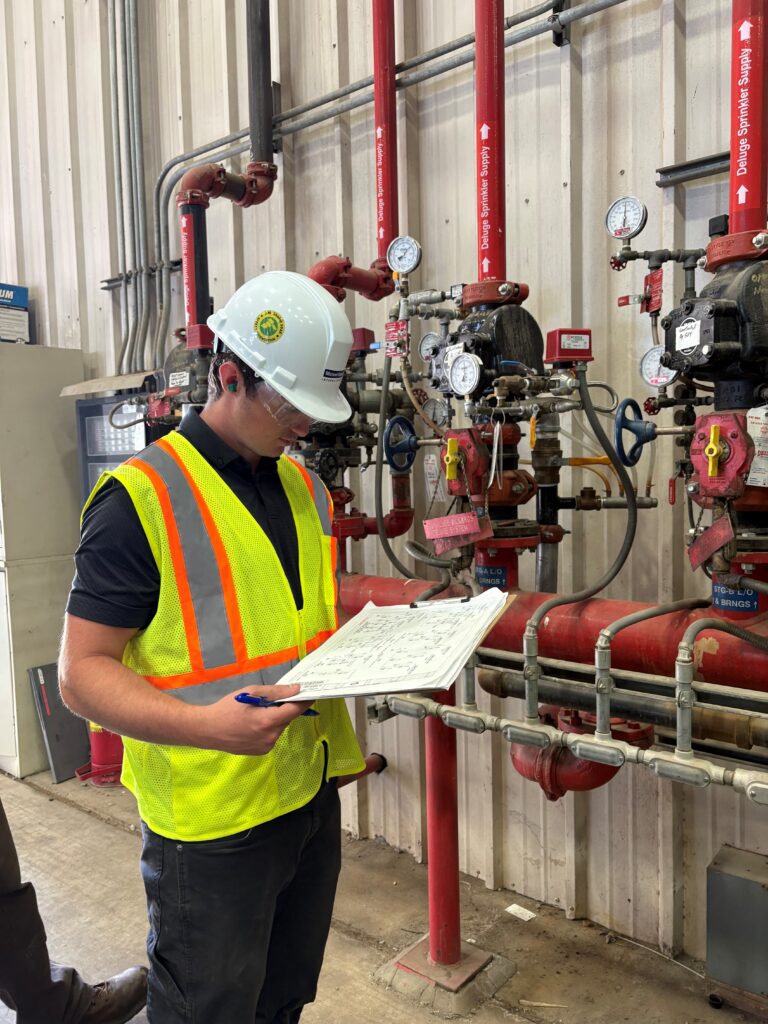
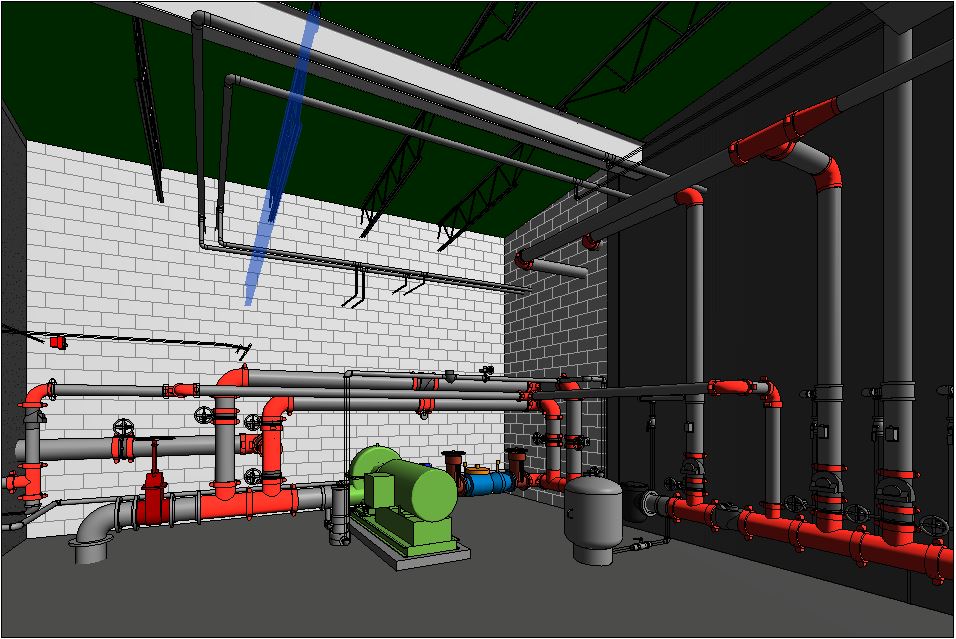
Our team can perform Fire Protection and Life Safety Facility Condition Assessments (FCA) for existing buildings to identify hazards, code gaps, and fire protection system deficiencies that affect occupant safety and asset resilience. We combine on-site inspections, maintenance record review, and performance testing to assess fire alarm systems, fire suppression systems (sprinklers, standpipes, extinguishers), means of egress, emergency lighting and signage, compartmentation and smoke control, HVAC smoke management, and fire-rated construction.
The FCA consists of a prioritized, risk-based report that maps deficiencies to local applicable codes and standards (NFPA, IBC, local amendments), estimates repair and replacement costs, and recommends mitigation strategies to reduce life-safety risk and support compliance. Our multidisciplinary team quantifies probability and consequences to rank priorities and address immediate life-safety hazards, near-term upgrades, and long-term capital replacement planning.
We provide deliverables for the FCA as annotated floor plans, deficiency photos, code citations, cost estimates, phasing recommendations, and a concise executive summary for stakeholders and funding requests. We coordinate with facility managers, AHJs, and designers to ensure recommendations are practical, budget-ready, and aligned with operations. Whether preparing for renovation, capital planning, or regulatory review, our FCA helps owners make informed decisions to protect people, property, and continuity of operations.
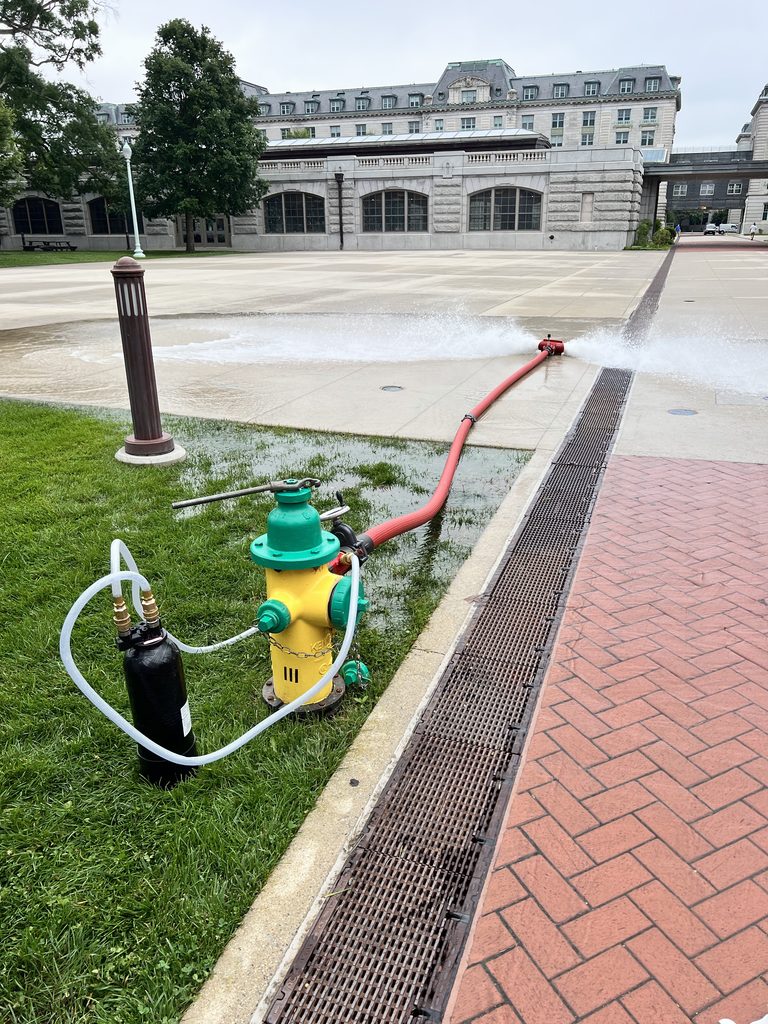
Fire hydrant flow testing provides the water supply information required to support the design, evaluation, and verification of fire protection systems. Testing is performed in accordance with NFPA 291, Recommended Practice for Fire Flow Testing and Marking of Hydrants, to determine available water supply characteristics, including static pressure, residual pressure, and available flow. The results establish the basis for hydraulic calculations, water supply evaluations, and fire protection system design.
Conducting flow tests during the early stages of project development allow available water supply conditions to be verified before fire protection system designs are finalized. Early identification of water supply limitations supports informed engineering decisions, improves coordination among project disciplines, and helps minimize design revisions during later phases of the project. Flow testing is commonly performed for new developments, facility expansions, infrastructure improvements, fire protection system modifications, and evaluations of existing facilities.
Testing activities are coordinated with local water utilities, facility representatives, and other project stakeholders to minimize operational impacts while obtaining accurate and reliable field data. Static and residual pressures, flow measurements, hydrant locations, and relevant site conditions are documented in accordance with NFPA 291 procedures. Field observations are reviewed for consistency and incorporated into the overall evaluation of the available water supply.
Michael Baker’s engineering reports summarize testing procedures, field conditions, measured data, calculated available water supply, and project-specific observations. The results support hydraulic analyses, sprinkler and standpipe system design, fire pump evaluations, code compliance reviews, and project documentation. Accurate field data and clear engineering documentation provide a reliable foundation for fire protection system planning, design, and regulatory coordination throughout the project lifecycle.
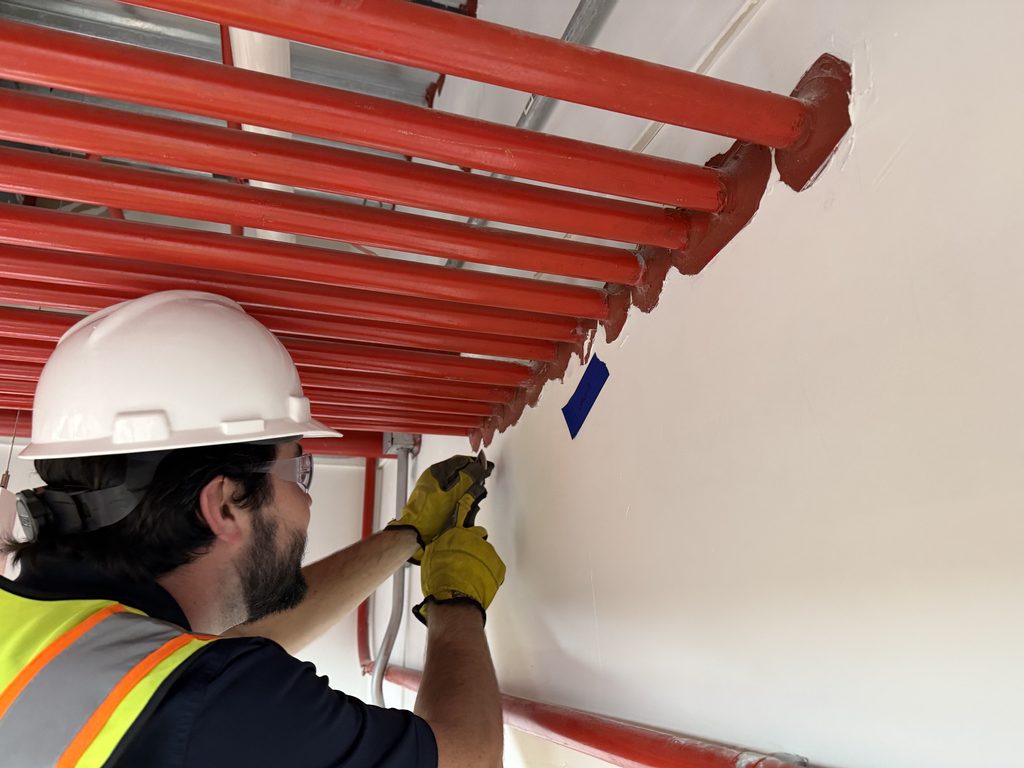
Firestopping plays a critical role in maintaining the integrity of fire-resistance-rated assemblies by limiting the spread of fire and smoke through penetrations and construction joints. We provide firestopping inspection services for new construction, renovations, and existing facilities to verify that installed systems comply with applicable building codes, project specifications, manufacturer installation requirements, and tested and listed firestop systems.
Our services include review of subcontractor provided fire stopping plans and details, as well as inspection of installed firestopping systems at penetrations and joints associated with mechanical, electrical, plumbing, and fire protection systems. Field observations verify that installed materials, annular spaces, backing materials, fill depths, and installation methods are consistent with the applicable listed systems and project requirements. Conditions that may affect the performance of fire-resistance-rated assemblies are identified, documented, and communicated to the project team for review and resolution.
Inspection reports summarize inspection findings, applicable firestop system references, observed deficiencies, recommended corrective actions, and supporting photographic documentation. The reports provide a clear record for owners, contractors, design professionals, and Authorities Having Jurisdiction (AHJs), supporting project closeout, code review, and future facility maintenance.
Our firestopping inspection services provide independent technical evaluations and record documentation to help verify the continuity of fire-resistance-rated construction and support the long-term performance of passive fire protection systems.
Department of Defense (DoD) projects require specialized fire protection inspection and testing throughout construction, system commissioning, and project acceptance to verify compliance with Unified Facilities Criteria (UFC), Unified Facilities Guide Specifications (UFGS), contract documents, and agency-specific requirements. Our fire protection team includes Qualified Fire Protection Engineers (QFPEs) with extensive experience supporting DoD projects across a wide range of facility types, including aircraft hangars, barracks, maintenance facilities, administrative buildings, warehouses, training facilities, and other mission-critical installations.
We provide QFPE inspection and witness testing services throughout the project lifecycle, including construction inspections, preliminary testing, Government acceptance testing, final functional performance testing, and project closeout activities, as required by the project specifications. Services include the inspection and testing of fire alarm and mass notification systems, automatic sprinkler and standpipe systems, fire pumps, underground fire service mains, smoke control systems, firestopping installations, special hazard suppression systems, and other fire and life safety systems. Representative testing activities include hydrostatic testing, fire pump acceptance testing, water supply verification, fire alarm sequence-of-operation testing, battery testing, integrated system functional testing, and other project-specific acceptance procedures. Inspection observations, test results, identified deficiencies, and corrective actions are documented through comprehensive engineering reports, certification letters, and supporting project records prepared for Government review and acceptance. Through experienced technical oversight, independent evaluations, and coordinated witness testing, we help verify that fire protection and life safety systems perform in accordance with project requirements while supporting efficient project delivery and successful Government acceptance.

