


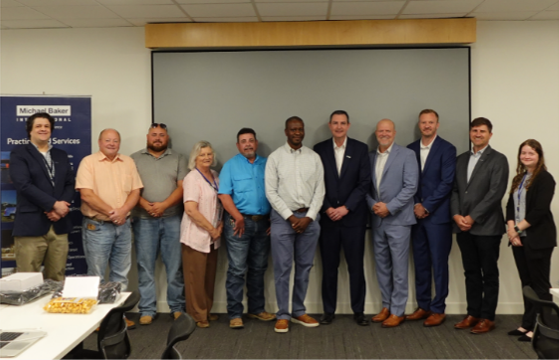
Safety can look different from project to project. On one job, it means managing construction activities next to 170,000 vehicles a day on a major Texas interstate. On another, it means collecting stormwater data along California highways while working just feet from high-speed traffic. What doesn’t change is the need to recognize risks early, make smart decisions in the field and look out for one another.
That’s the idea behind S.L.A.M. (Stop, Look, Assess, Manage), the safety process our team at Michael Baker International uses to identify hazards, evaluate risk and take action before incidents occur. Each year, our S.L.A.M. Safety Awards recognize teams that have demonstrated exceptional safety performance, strengthened our firm’s safety culture and found innovative ways to keep people safe while delivering important work for our clients.
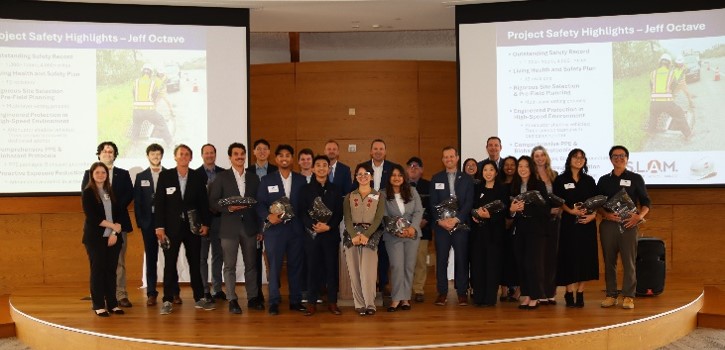
This year, the Michael Baker Corporate Safety Council reviewed a record number of nominations across our Construction Services and Non-Construction Services teams. After hearing directly from the finalists about their projects, challenges and safety approaches, the Council selected two teams whose commitment to safety stood out among an impressive group of candidates.
These winning projects share a common theme: safety is not a checklist item. It is built into every decision, every plan and every day in the field.
We’re proud to recognize this year’s winners and the example they’re setting across our firm. Learn more below!
S.L.A.M. Construction Services Winner: I-35E at FM 1171 Reconstruction Project
Keeping North Texas Moving Safely
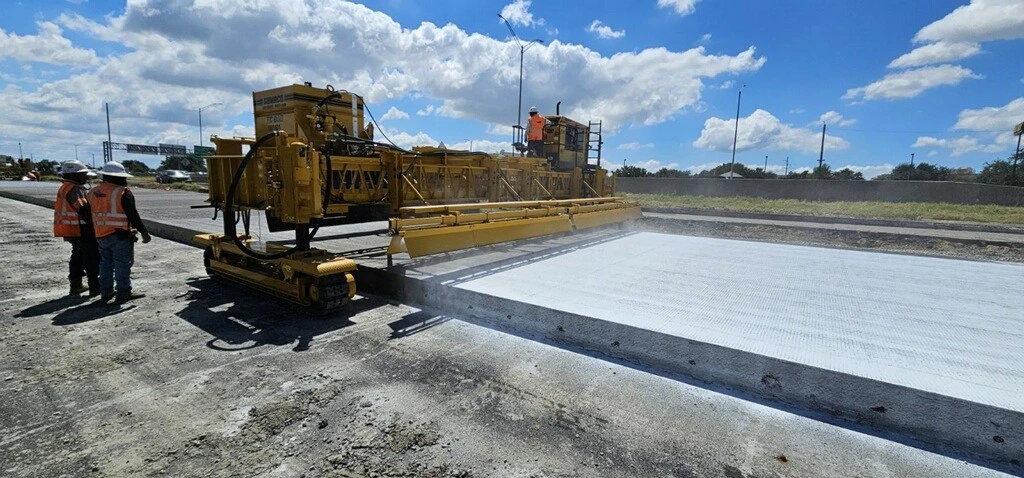
On one of the busiest stretches of Interstate 35E in North Texas, our team is helping deliver the $105 million reconstruction of the FM 1171 interchange in Lewisville, Texas. The corridor carries more than 170,000 vehicles each day, creating a challenging environment for construction and inspection teams working alongside live traffic.
As the Texas Department of Transportation’s (TxDOT) Construction Engineering and Inspection (CEI) partner, Michael Baker oversees construction inspection, materials testing, design reviews, change-order coordination and quality assurance for the complex interchange reconstruction.
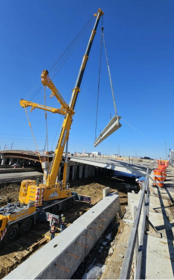
The project presents no shortage of challenges, from overnight freeway closures and active hospital access to high-voltage utilities, contaminated soil and undocumented underground infrastructure. Through proactive planning, weekly safety discussions and close coordination with contractors, utility companies and local stakeholders, our team has successfully managed more than 40,000 cubic yards of contaminated soil, identified and resolved potential traffic hazards before they became incidents and maintained critical emergency vehicle access throughout construction. Most importantly, the team has achieved these milestones while logging more than 24,000 staff hours with zero recordable safety incidents, a testament to a safety-first culture that prioritizes both workers and the traveling public.
S.L.A.M. Non-Construction Services Winner: Caltrans Statewide Trash Discharge Study
Tracking Trash, Protecting Waterways and Putting Safety First
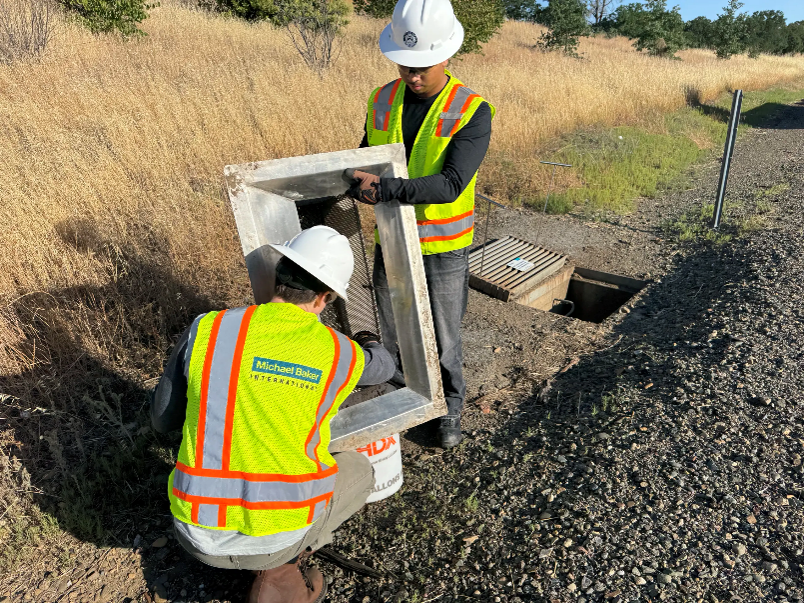
What happens to litter that lands along California’s highways? Our Water Quality team partnered with the California Department of Transportation (Caltrans) to answer that question through the Caltrans Statewide Trash Discharge Study, a first-of-its-kind effort to measure how much trash enters the state’s storm drain system from highway right-of-way areas.
Spanning 84 monitoring locations across nine Caltrans districts, the study required teams to install custom trash-capture devices and collect data across diverse environments throughout California. Since launching in 2023, the effort has generated more than 1,000 data collection events, supported by a team of 20 Michael Baker professionals and more than 25 subcontractors.
The work came with significant challenges. Crews operated alongside high-speed traffic, lifted heavy storm drain grates, navigated uneven terrain and encountered everything from extreme weather to biohazards. To minimize risk, our team implemented rigorous safety protocols, including truck-mounted shadow vehicles, three-person crews with dedicated spotters, comprehensive pre-field planning and ongoing safety training.
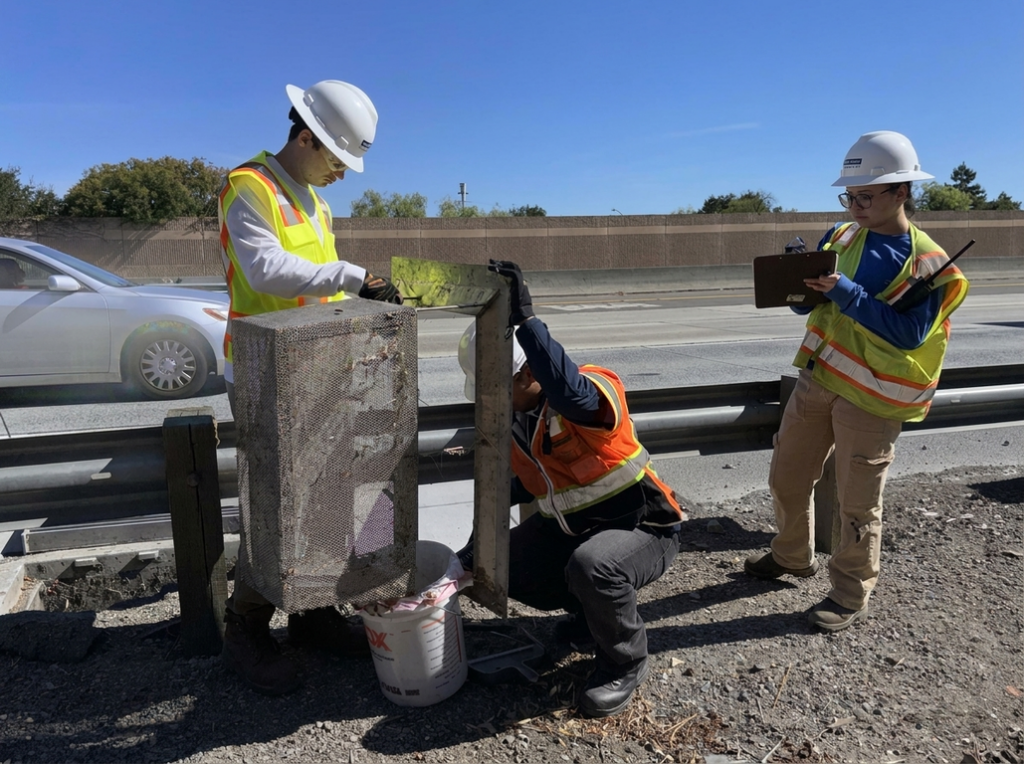
Our team’s commitment to continuous improvement also led to an innovative safety enhancement. After analyzing a year of data, they reduced site visit frequency without compromising study results, significantly decreasing worker exposure to roadway hazards.
Most importantly, the study has logged more than 1,300 hours of fieldwork with zero injuries, helping Caltrans protect California’s waterways while demonstrating that complex statewide field programs can be delivered safely and effectively.